Sunday, May 19, 2013

The Glory of God is Man Fully Alive


          At Strake Jesuit, and all over the world, we are called to be man fully alive. According to St. Irenaeus, "The Glory of God is Man Fully Alive". Throughout this school year, I have been asked that question several times and have pondered about what it means. When I first entered Stake Jesuit and was asked that question, I replied "It means that the glory of God is to live life to the fullest and praise Him in all that you do." That is right to a certain extent, but what if you do something immoral, such as rob a bank? Using the gift of reasoning and natural law, I doubt God receives glory from you doing that. Ultimately, this quote has both a definite and a non-definite answer. Everyone interprets it in different ways, but all those different responses (assuming they are correct) have one main aspect to them in common. In short, the glory of God is living your life they way God intends for you to live it. We have to keep our ears and hearts open and so that we may not only hear but listen to what God has in store for our life.
          An important part to living fully alive is to recognize that we don't need an extraordinary life in order to be fully alive and for God to love you as an individual. In fact, Jesus lived an ordinary life nearly his entire life! From the ages of twelve to thirty (the year he began his public ministry), we know nothing about Jesus' life. If we are to imitate Christ, then it is actually important to live a rather ordinary life and take pride in what you do and praise God for all he has done for us. Of course, the way you live your life is ultimately dependent upon God's specific plans for you and whether or not you choose to follow them. There are times though when we mess up and sin. In order to restore communion with God, we must pray to God and ask for forgiveness, and if you truly mean what you say, God will forgive you. If the sin is grave, then it is important to go to confession for multiple reasons, the main one being that it is a sacrament from which we can receive grace. After our sins are forgiven, we must remember that we are both spiritual and physical beings, and thus we must also say we are sorry through our actions. We must work at never committing the sin again and depending on the severity of the sin, do something to show you are actually sorry for what you have done.
          There are many sayings today that have been interpreted by the people in a certain way, but I interpret them differently. Yolo, so do all that you can while here on Earth in order to better the lives of those who are not as lucky as you. You only live once on Earth (and then when your Earthly life is over , hopefully, you go to heaven), and although we all have different vocations, everyone is called to live the Commandment of Love. That is, to love others as Christ loves us. If you live a good and holy life, then you will forever live a life of happiness, joy, and love. In English I my teacher taught me what Carpe Diem meant. It means "Seize the Day", to never put off anything for the next day that can be done today. Living as man fully alive means that you make the most out of live and wasting time on unimportant things does not fall in the category of fully alive. I thank God every night for the day and no matter how bad they day may have gone, Hakuna Matata. There are no worries, and by that I mean with God. As long as we have faith and trust in God and at the same time try our hardest to do what is right and work to achieve the goals at which God has set for us, then there are no worries. God will always provide for us, even if the future of our life seems bleak for a time.
         The question of what does it mean to say "The Glory of God is Man Fully Alive" is not an ordinary question that can be looked up and has an exact answer to it. It is a question in which its answer continually grows and improves as we live our live fully alive. My answer to this question has grown extensively over the last two years and I have come to understand my faith much better thanks to my wonderful teacher, Mr. Cole. God created us out of love, and when we live our lives in a loving manner, God is proud of us and he receives glory from our love. Thus, the root of the question is "What is love". On that note, I leave these lines from St. Paul's letter to the Corinthians which I believe summarizes it perfectly.

          "Love is patient, love is kind. It does not envy, it does not boast, it is not proud. It does not dishonor others, it is not self-seeking, it is not easily angered, it keeps no record of wrongs. Love does not delight in evil but rejoices with the truth. It always protects, always trusts, always hopes, always perseveres. (I Corinthians 13:4-7)

          #ForeverSpreadTheLove
         

Saturday, May 18, 2013

Indulgences

          Today, I would like to talk about indulgences. An indulgence, plain and simply, is a certain set of actions that a priest tells you to do, and by doing these actions the Church, instituted by Christ, guarantees that you will receive grace from God. Furthermore, an indulgence for a certain set of actions can only be given once those actions have been forgiven. It either removes "part or all of the temporal punishment due to sin" (CC 1471).
          An indulgence requires faith and normally involves the act of prayer, sacrifice, work, or a journey (this is only in extreme conditions). When you went to do something in order to lessen the punishment of your sin, you can do whatever you desire to do, whether it be pray ten Hail Mary's for a month or go on a long pilgrimage. An indulgence though, is given by a priest and, through the Church, gives grace.The grace receive from the Church comes from a "treasury of merits" which is the everlasting grace Christ won for our Salvation. By partaking in these indulgences, we not only lessen the graveness of our sins, but we gain good virtues along the way, allowing us to come closer in relationship to Christ. An indulgence is either partial or plenary depending on whether or not all of the debt due to the sin is removed. It is important to receive confession and the Eucharist once the indulgence has been completed in order to fully complete it. Indulgences are often giving on certain feast days or special occasions. Furthermore, the Church has an official list of indulgences called the Enchiridion of Indulgences. Some acts in this book include visiting the Stations of the Cross and praying at certain locations.

Friday, May 17, 2013

The Glory of God is Man Fully Alive

To be fully alive does not really mean to just be yourself and follow whatever your heart desires. Ultimately, the only way to truly be yourself is to live through and for God, who created you and gives you the miracle of life. As the glory of God is man fully alive, man fully alive is man glorifying God.

From this year in Theology, I have been able to learn the many
responsibilities that we have as Christians, especially as Catholics. We have to live our lives according to God's will by following the Ten Commandments that he gave to Moses on Mt. Sinai and by following the New Commandment of Love that Jesus gave to his Apostles and was handed
down through all these generations. We have to treat all of our neighbors, even strangers, with love and respect. In doing so, we somewhat evangelize the world. Ecumenism is one of the main goals for the Catholic Church to unify all the Christian faiths. And, by spreading the Gospels and being a model of holiness for others, we can evangelize the world and allow others to hear the Good News. We have to try to the best of our ability to live in imitation of Jesus Christ. Living a life of selflessness can help us achieve this goal and find the true meaning of life. We also have to care for the creation of God by living as stewards and caretakers of the earth. Although God created everything for us, his ultimate creation, we still have the role of stewardship. We can see the glory of God in all of his creations.

We have the responsibility of attending Mass every Sunday and worshiping God in communion with one another as we hope to be in communion with God and someday join him in his Kingdom of Heaven where there is eternal happiness and life. We must live a life of prayer and  holiness, participating in the sacraments and receiving the graces that they offer us. We must be careful to not fall into temptation and sin, for it hurts our relationship with God and separates us farther and farther from him. We have to look for the truth at all times and make sure that what we are doing is the right action to commit, for the Devil tempts us through distortion of the truth and fear.

Ultimately, we are to follow in Jesus' footsteps. And, to help us do this, Jesus established the Church in order to carry on his teachings and help all of us live our lives fully, giving glory to God. By following the dogma of the Catholic Church, we can be humans that are fully alive, and we can show our neighbors, who may be our separated brethren or people of a completely other faith, how to live as people that are fully alive. As St. Irenaeus once said, "the Glory of God is Man Fully Alive."

Sacrifice and Self-Denial

          Following the blog post about Matrimony, I would like to talk about sacrifice and self-denial. In the Church, there is a word that means to seek holiness through self-denial. This word is mortification. As Christians, we must practice mortification in our daily lives so that we may strengthen our bodies against the temptations to sin and thus strengthen our souls as well. We can strengthen our resolve to not sin by practicing self-control and avoiding anything that may cause us to sin.
          Mortification does not simply involve not sinning, but avoiding anything that may even tempt us to sin. One common example of this is to avoid looking at someone not dressed appropriately so that you are not later tempted to commit a sexual sin. This also includes not watching shows in which promote these immoral actions. Another example is not joining in conversations in which the people are gossiping. If you happen to hear some of the gossip, do not tell anyone because you hurt both the person whom you are gossiping about and yourself in the end (eventually you will regret spreading the gossip once the person being gossiped about gets hurt). One important thing to not do, which many people do in today's culture, is listen to inappropriate music. Today, there are many songs that talk about all these immoral actions and make them sound good and common. The common part is true, but the good is not. We must live our live according to the path we choose, and if we get married then the act of sex should only be practiced with your partner.
           Self-denial involves practicing common virtues. This may include being willing to help someone even though it may slightly inconvenience you are simply being patient while in a long line for something minimalistic. One of the simplest things may be remembering to pray every day (and then praying). Attending mass on a complicated weekend is also a good example.

Thursday, May 16, 2013

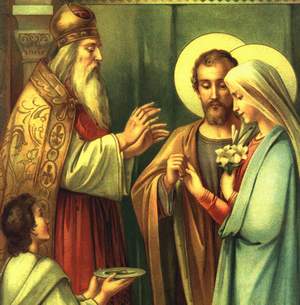
Matrimony

When Jesus was made flesh and came to this world, he elevated matrimony to the status of a sacrament. So, a marriage between two baptized people is a sacramental marriage and cannot be dissolved once it is consummated. You do not want to divorce and remarry once you have been in a sacramental marriage because that is pretty much committing adultery and you would be living a life of mortal sin. When Jesus was on earth, he said, ""Every one who divorces his wife and marries another commits adultery, and he who marries a woman divorced from her husband commits adultery" (Luke 16:18; cf. Mark 10:11–12). And, St. Paul goes to say that a man and a woman are bound by sacramental law as long they live. The Church has been proclaiming Christ's teaching on the permanence of marriage from the early times of the Church, and she continues to do the same in this modern time. Although some other Christian denominations have changed some of their teachings in order to allow divorce in their culture, the Catholic Church remains faithful to the early teachings of Jesus.

There are some instances when a divorced couple can remarry even though their ex-spouses are still alive. One of these instances is when a sacramental marriage never even existed to begin with. There has to have been an exchange of valid matrimonial consent between both the man and woman in order for there to be a sacramental marriage. So, without this exchange, there isn't a sacramental marriage taking place. A decree of annulment can be given, allowing the man and woman to remarry, if a diocesan marriage tribunal establishes the fact that there is no real valid marriage. So, there is actually no divorce or remarriage taking place because they were never married before God. Only man may see this as an actual marriage while God does not.

But, if the man and woman are in a sacramental marriage, they cannot remarry even though they may live in separation from one another. St. Paul explains this as he says, "To the married I give charge, not I but the Lord, that the wife should not separate from her husband (but if she does, let her remain single or else be reconciled to her husband)—and that the husband should not divorce his wife" (1 Cor. 7:10-11). We do not have to worry so much about facing problems of divorce because God is looking over us and makes sure that those that are married have the grace necessary to live out their marriage vows and either stay married or live happily. Because Matrimony is a sacrament, it gives grace to help live how God wants us to live in union with one another as one flesh.

Thursday, May 9, 2013

Viva La Vida

          Viva La Vida is a song by Coldplay that means "live life". But what exactly do the lyrics of the song mean? I was wondering that the other day when I decided to look up the lyrics and learn them because I enjoy listening to this song very much. It turns out that the song is about a king who was so powerful he could summon massive armies at his command. He would gamble with his power and his enemies would fear him greatly. The crowds would rejoice "now the old king is dead, long live the king!" This means that he was the one king who conquered many others. Then suddenly, after having held the key (to his kingdom) for so long, he realized that the walls were closing in on him and that his castle stood on pillars of salt and sand. I'm not an architect, but I am pretty sure that is not a good foundation for a kingdom. He was so powerful and was conquering so many other kingdoms that he did not even realize what was happening inside his own kingdom. Now here comes in the religious aspect and why I am blogging about this. The next part of the song (the refrain) talks about how he hears Jerusalem bells ringing, Roman cavalries singing, to be his mirror, sword, and shield, and to be his missionaries in a foreign field. He is using religion to conquer the kingdoms! He wants them to represent his image, power, and fortitude. He wants missionaries sent, but (unlike priests of today) in the end, as we learn in history, missionaries conquer as well! The refrain also says that once you're gone there was never an honest word, meaning that he lied to the people when he was drunk with power, and once that power was gone so was his kingdom. He then said that the people could not believe what he had become (which today people cannot believe the kings who used to conquer in the name of religion) and in the second and third refrain the part about the power changes to "I know St. Peter won't call my name". He knows and regrets what he has done, but when he was so powerful he never realized what he was doing.
          This song has a lot of meaning and explains the issue about people asking questions such as "Why is religion (especially Christianity, since in the song the king must have used Christianity as his religion since he knew about St. Peter) considered so good when it has caused so many wars?" Well, it is not Christianity that starts wars, it is the people. Specifically, it is one person or a small group of peopl
e who have great authority and seem very sure of themselves and the people follow. In order for the people to follow them and join them in conquering other nations, they need a reason. They need something that the people are passionate about and that they feel so strongly about that if they can be convinced that doing wrong will bring good to their people (and to the people they conquer), they will do whatever it takes. Christianity does not start wars; it is the kings and rulers who use whatever they can to gain power, wealth and fame, and they mask their evil with anything they can think of, which has happened to be Christianity many times in the past.

Wednesday, May 8, 2013

The Souls of the Unbaptized Infants

The Catholic Church is not 100% sure about what happens to those babies that were never born or that died at a very young age and were never baptized, for it is not their faults that these misfortunes happened to them. They never committed a sin and never really got the chance to reason and use that intellect and free will that God has blessed us with. But, it is certain that the souls of these infants are taken care of by our omnibenevolent God and do not experience any suffering. 


The common perspective is that the unbaptized/aborted infants go to a place called Limbo of the infants, not Purgatory. This place is not Heaven, for they do not have the beatific vision of God and are not living in communion with him. But, because they do not have any personal sin, they will not experience any suffering. They will not experience the supernatural happiness of being with God, but they will experience natural happiness. The Church does not exactly know what happens to babies that are without Baptism and die or those that are aborted. It is certain, though, that they go into the hands of a truly loving and merciful God. They have not committed anything sinful; therefore, they should not experience any suffering in their afterlife. This speculation of limbo does not have to be accepted by the members of the Catholic Church. There are other things that are believed, though. Some people count the desire of the Church to baptize the unbaptized babies or aborted babies as a form of Baptism of Desire. Some people think that the aborted babies experience a Baptism of Blood. But, this way of Baptism for aborted infants is not very accurate, for the Church has stated that Baptism of Blood occurs when a person dies from a martyrdom for his/her faith. The choice of a mom of aborting a child is not necessarily a martyrdom for the Christian faith. Ultimately, we know that God, who is loving and merciful, chooses what happens, and hopefully this involves salvation.

Tuesday, May 7, 2013

Ronald Davis: A Human Being

          In this video, Ronald Davis talks about how hard it is to be poor and survive each day. He does not enjoy having to shake his cup around the streets every day so that he can get some money but he has no choice because no place will give him a job. He later says that he got upset when a person came up to him and told him to get a job and stop being a bum. Davis was very upset by this and replied that he is not a bum; rather he is a human being and we are all equal. Davis said my God bless his soul, and the man came back later apologetic and said that he had been having a bad day and gave Davis thirty dollars.
          God created all human beings equal, and he loves all of us equally as well. Since we are all created by God in the image of God and created out of love, we all share in a common communion. We are like a body, and Christ the King is the head. When we hurt someone else, that body is injured and everyone suffers from the injury, whether it is minor or severe. When Davis was called a bum, he was very hurt, and I'm sure the viewers felt very sorry for him as well as I did. When we make a mistake or hurt someone in the communion (which is like hurting ourselves because we are the same body), we feel terrible afterwards, and that is why the man later came back and apologized to Davis. We are supposed to obey the Ten Commandments in order to live a holy and good life, but as long as we follow the new Commandment of Love, we obey all the commandments and can live a great life. This commandment is to love one another as Christ loves us. Christ, who is God, is all loving and forgiving, and though we can never be perfect (which Christ is), we can set our goals to be perfection and aim at getting closer and closer to those goals each day. Going back to the Davis issue, whenever someone is h
urt, the person who gave the hurting must both apologize and do something else in order to somewhat repair the rift between the two people that was formed after one of the persons had been hurt. The man who hurt Davis apologized and gave him thirty dollars, while furthermore saying he had been having a really bad day and did not mean what he said. As a Christian, this part is crucial whenever we sin (which is inevitable) and shows that we are sinners but we desire to live a Christlike life and be one body with no injuries whatsoever.

The New Commandment of Love

After the Last Supper, Jesus told his Apostles a new Commandment. In this Commandment, Jesus told the Apostles, "Love one another, as I have loved you." As children of God, we are all called to love one another as Jesus loves us and as we love ourselves. We should always respect our neighbors and treat them the way we would like to be treated. We have to realize that we are all equal in dignity as God's sons and daughters, and we should never view someone as being lower than us. We should not respect someone less than another person because of his/her status or appearance. Although created unique, we are all humans and deserve to be treated with equal respect. Now, that is not to say that we have the same roles or responsibilities in life. We do have different roles and responsibilities in fulling God's will, which is the way God wants it to be. But, we are all created equal in dignity and created in the image and likeness of God. Some ways of treating our neighbors with respect is by helping others out when they are in need and fulfilling our virtue of charity, whether that is by emotionally supporting them by giving them beneficial advice or donating money and food to charities.

In the video of Ronald Davis explaining the struggles he faces while living a life without a proper home, he states that there are many people that disrespect him and call him a bum as they tell him to get a job. But, instead of insulting our neighbors and laughing at them, we should help them out and give of ourselves, whether that is time, advice, and so on. We should not always worry about what we can receive and get out of certain things; rather, we should give and sacrifice things just like Jesus did during his time on earth. At the same time, we should be very thankful for the things that God has blessed us with. We should be very grateful and appreciate everything that God continues to do for us. Life is a miracle itself. God will supply for those who give. Also, we have to be careful to not take things for granted. We have to watch the amount of things that we use, for we are called to be caretakers and shepherds of earth. For example, we can take only what we are going to eat at a buffet or close the faucet to stop the water from running when we brush our teeth. Some of our less fortunate neighbors in other parts of the world would really appreciate all the things that we take for granted, which is why we could donate to charities that help provide food and necessities in those other countries. By living out the New Commandment of Love and fulfilling our task of being caretakers of the world, we can better grow in holiness and fulfill God's will.

Monday, May 6, 2013

The Acceptance of Salvation

I believe that there is a problem with many people becoming prideful and thinking that God should just give them salvation. Like the metaphor of the builder constructing a house with one door that grants entrance into the house, yet the owner insists that there be a door in the rear of the house, God gives us the opportunity to live in his Kingdom of Heaven with him where there is eternal life and happiness. But, many of us choose to seek what is most pleasurable in this life while disregarding what our true purpose of life is, to fulfill the will of God. We sometimes become greedy and prideful and sometimes believe that we deserve the best and should be recognized as gods in some sense. We must be careful when we choose what actions we are going to commit. We do not want to make the same that our parents, Adam and Eve, committed when they were first created by our all loving creator. We sometimes have a tendency of expecting more than what is really available and offered. Sometimes we want more than the essentials and the generous offers. For example, if a graduating high school student really hopes of getting a scholarship to one of their university choices, they cannot simply expect that university to give him/her the scholarship just like that. You have to work for it and fulfill all the requirements and standards that the college has set. You cannot just sit around and perform at a mediocre standard, and you cannot just become lazy and simply expect the scholarship to be offered to you. Salvation is very similar to the scholarship in this example. God has most certainly done his part in getting us salvation and the opportunity to go live with him in Heaven. Now, it is our turn to complete our part and live in imitation of his only Begotten Son Jesus Christ as we fulfill his will. We have to put effort into everything that we do, especially into living the life God wants us to live so that we me experience eternal life with him in Heaven.

We have to gracious to God and give him thanks for even sending his Son to open the gates of Heaven and allowing us to experience salvation. We must be very careful to make sure that we do not become too prideful. It is okay o like yourself. As a matter of fact, you should, for it is the healthy thing to do.  But, when you begin to think that you’re more important than you actually are, the sin of pride begins to take effect. Pride is the key to all other sins, because after you believe that you’re more important than you actually are, you compensate for it when others don’t agree with your judgment. You try to make everything you do, even if wrong, look okay by making excuses for lying, cheating, stealing, and insulting. You begin to believe that only you really understand yourself and your actions and that there isn't anyone else that does. Instead, the Church teaches that you should experience humility, like Christ did, so that you do not become too prideful.

Saturday, May 4, 2013

Women in the Priesthood of the Catholic Church


Although there have been about 150 women that have decided not to wait for the Roman Catholic Church to lift its ban on women priests, be ordained, and start their own congregations, the Church will probably never allow women become priests. The Church has no authority to confer priestly ordination on women. There are many reason as to why this so. In Sacred Scripture, Jesus only chose men to be his Apostles. So, the Church follows in Christ’s ways and imitates him in his choosing of only men. God’s plan is for the Church is for women to not be ordained into the priesthood. Having women in the clergy is incompatible with Christian Faith. The Congregation for the Doctrine of the Faith, in conjunction with the pope, ruled that the teaching of having women in the priesthood requires definitive assent founded on the written Word of God, and from the beginning constantly preserved and applied in the tradition of the Church, it has been set forth infallibly by the ordinary and universal magisterium. The Church has no authority whatsoever to confer priestly ordination on women and that this judgment is to be definitively held by all the Church’s faithful. Overall, the Church has never allowed women to become priests and is going to stick to that teaching.


The Catholic Church is immutable, meaning that she never changes. Therefore, waiting for the Catholic Church to change its teaching on who can be ordained priests is pointless. Sure the Church increases its understandings of certain teachings, but I do not believe that it is possible for the teaching of who can be in the priesthood is going to change. By starting their own congregations in order to become married, this woman and others are somewhat starting a schism and teaching heresy. So, they are not only choosing to go with their own beliefs, rejecting those of the Church, but they are also causing disunity within the Church, for schism and heresy are two of the most major wounds to unity.

Also, we have a role of priesthood as the laity. We do not need to be priests to be able to spread the Word of God evangelize the world. We really have a strong effect through our actions. And, through the action of these women insisting on becoming priests and eventually becoming priests in their own congregations, the chance of evangelization is being harmed, for there are now different beliefs that do not agree with those of the Catholic Church being spread. Also, if a women is not satisfied with the priesthood of the laity, she can become a nun and devote her life to God and prayer, similar to a priest. The only real difference is that a priest is ordained and so can perform the sacraments. I believe that these women should just accept the fact that the Church is not going to change in its teachings and accept that they cannot become priests within the Catholic Church. Women desiring to become priests is like a man wanting to go to an all girl school or vise versa. Some people like to break the rules of society, which is sometimes the right thing to do, but, in this case, it is not what God's plan is.

Wednesday, May 1, 2013

Who Can Receive Communion?


It is certain that Catholics can receive the Eucharist. But, in order for a Catholic to be able to receive Communion, he/she must be in a state of grace. What does it mean to be in a state of grace? Well, in order to be in a state of grace, one must have had a good confession since his/her last mortal sin, believe in transubstantiation, observe the Eucharist, fast, and not be under an ecclesiastical censure such as excommunication. You have to be in a state of grace because you have to receive sanctifying grace when you receive the Eucharist. And, by not being in a state of grace when receiving the Eucharist, you are committing a sacrilege, which is very serious because you do not receive the sanctifying grace that is supposed to come along with the Eucharist. Believing in the doctrine of transubstantiation means that you must believe that the bread and wine that are consecrated during Mass are actually the Body and Blood of Christ. Along with his Body and Blood, Christ’s soul and divinity are present in what appears to be bread and wine. When I mentioned that a Catholic should fast in order to be able to receive the Eucharist, I was referring to the Eucharistic fast. This means that you should not have put any food or drink into your body, in exception of water and medicine, one hour before you receive Communion. So, really, this means that you should not eat anything after about fifteen minutes before the Mass commences.


Non-Catholic Christians are welcome to celebrate in the Eucharist with us as our brothers and sisters. We, as Catholics, invite our fellow Christians to celebrate the Eucharist  in order to bring us closer to one another. Participating in the celebration of the Sacrament of the Holy Eucharist is the highest sign of Christian unity. But, according to the provisions of canon law,  non-Catholics have to have permission from the bishop in order to be able to receive the Eucharist. Also, someone who does not believe in the Real Presence of Christ in the Eucharist should not receive Communion, for it is very dangerous according to Sacred Scripture. Eastern Orthodox Christians can receive Communion because they have the same faith concerning the nature of the Sacraments. Christians should respect their church’s guidelines when discerning whether or not to receive Communion. If a non-Catholic is near death, maybe he/she is suffering from a car accident and only has a few hours to live, he/she can have a minister administer the Sacrament to them if they ask for it. When non-Catholics do have the opportunity to receive the Eucharist, they still have to fulfill the same requirements that apply to Catholics.

For non-Christians, some of the same guidelines apply. Like non-Catholics, they are welcome to join the celebration of the Eucharist while they are still not eligible to receive Communion. We still seek unity among the entire human race. But, there are no special circumstances when a non-Christian can receive the Eucharist, except in occasions of emergency after they receive the Sacrament of Baptism. For example, a Muslim, or anyone of another non-Christian faith is about to die, he/she can be baptized on the spot, and the baptism does not have to be performed by a priest. Then an he/she can have an extraordinary minister of Holy Communion bring him/her Communion as Viaticum.

Catechumenate and Easter Vigil


The Catechumenate is a process by which people who desire to join the Church have to go through. In this process the people are taught about the Faith and prepare for the Sacraments of Initiation. Most of these new members or initiated into the Church at the Easter Vigil. Today, the Catechumenate is referred to as an age-old way of entering the faith. The process can last from a couple of months to many years and involves Bible studies, public rites in worship, and meditation over God and vocations.
The Rite of Baptism involves pouring water on the person’s head and saying “I baptize you in the name of the Father, and of the Son, and of the Holy Spirit”. At times, the person’s head is immersed in the water, also symbolizing a cleansing of sins by rising out of the water and into a new life. The rite of Baptism also includes a recommitment of everyone who is present’s baptismal promises. The candle symbolizes the light of Christ (when it is lit) and the white garment worn by the priest symbolizes new life in Christ. The water also symbolizes a sharing in the Passion, Death, and Resurrection of Christ.
In the Latin Rite, the three Sacraments of Initiation are given simultaneously on adults or teens who are baptized at the Easter Vigil. For infants, Confirmation and Eucharist are temporarily put aside until they have reached the age of reason, or around 7 years old. At times, Confirmation is administered through Catholic schools or parish organizations during middle school or high school. Baptism is necessary for salvation since the grace received from it makes the Baptized united in a communion with Christ the Savior.

Monday, April 29, 2013

Sacraments and Human Nature

          "The Sacraments are efficacious signs of grace, instituted by Christ and entrusted to the Church, by which divine life is dispensed to us" (CCC 1131). These Sacraments are often called "the holy mysteries" because a mystery is something that is sacred and hidden. In our human nature, we always desire to discover the truth to any and all mysteries we encounter, and the Sacraments are one of the greatest mysteries of all. Through the Sacraments we receive the grace of God through the power of the Holy Spirit and the authority of the Church, which was given to the Church (and founded by) Christ. There are three main aspects to a Sacrament that make it what it is. First, a Sacrament is a sign since it shows something invisible that is real. One example is Baptism, in which the water being poured over the person's head represents the cleansing of sins. In human nature, it is hard for us to believe something we cannot see, just like Doubting Thomas, who did not believe Jesus Christ had risen from the dead. Likewise, the Sacraments being a sign make it easier for us to understand what is taking place. Second, a Sacrament is a sign of grace because we receive the divine life through the Sacraments. By receiving a Sacrament, we receive grace from God and become closer in communion with him. Depending on how open we are to receiving the Sacrament, we receive more grace from God and are more fully able to live a Christ-like life. Third, a Sacrament is an efficacious sign of grace, meaning that it brings about what it signifies. When receiving a Sacrament, the grace comes directly from Christ and not from the priest or minister. By our human nature, we are enlightened when we receive grace from God and it becomes more clearly shown to us through the signs of the Sacraments.

Types of Prayer

          A couple of days ago, I talked about living a life of prayer and concluded with Jesus giving us the types of prayer and how to pray. Today, I would like to talk about the types of prayer. We learn about the types of prayer through the Church's Tradition through the guidance of the Holy Spirit. There are four main types of prayer that we learn from the Church. They are petition, adoration, contrition, and thanksgiving. In petition, we ask God to heal us and to send down his Holy Spirit so that we may be filled with courage, strength, and vitality so that we may be more virtuous and be able to accomplish our goals or help another with his/her goals. In adoration, we praise God for loving us eternally and being perfect in every attribute and for being kind enough to create us only so that we may be able to live and love him (in other words, God created us solely for our own sake). In contrition, we ask God forgiveness for what we have done wrong and desire the communion with God to be strengthened and one day fully restored to resemble the glory of the communion between God the Father, God the Son, an God the Holy Spirit. Lastly, in thanksgiving, we thank God for creating us and being with us at all times, guiding us in all that we do. We also thank him for sustaining us and sending down his only Son Jesus Christ so that he may die on the Cross for the Redemption of our own sins.
          There are also three main expression of prayer. These are vocal prayer, contemplative prayer, and meditation. Vocal prayer is praying out loud, using the body and the heart. This may be done more often when reciting commonly known prayers with other people or in large groups such as the Our Father or Hail Mary. Contemplative prayer is the expression of the mystery of a prayer. It achieves a greater union with Christ and allows us to share in his mystery. Finally, meditation revolves around trying to understand Christ greater through prayer.

Saturday, April 27, 2013

Prayer

          Prayer is an extremely important part of every Christian's life. Prayer if speaking with God and thanking him for all he has done or requesting good things from God. This is necessary so that we may grow in communion with God (since the best way to get to know someone and for them to know you is to talk to them) and establish and everlasting bond of love. We do not begin to pray because we feel the initiative to do so, but it is God who calls us within and asks us to speak with him. Through prayer, we try to get to know Christ, love him, and be united to him. By learning about the life of Jesus and what he did so that we may be saved, we learn how to pray just as Jesus prayed to his heavenly father.
          Jesus Christ was constantly praying while on Earth, especially before major events in his life. We also to likewise. At times we may only pray at night before we go to bed and at mass, but whenever something tragic happens or we are anxious/nervous about an upcoming event, we begin to pray more. On the other hand, when something great happens and our lives are filled with sudden joy, we rejoice and thank God for all he has done for us. When one of Jesus' disciples asked Jesus to teach them (the disciples) how to pray, Jesus responded with the Our Father. This is where the Our Father comes from. It is a gift from Christ and the Holy Spirit, which is why we pray it often. It shows that prayer means communion/communication with God and we recognize that God is an all-loving Father and not a supreme being who commands us from above. Through Jesus' example, we learn about the types of prayer and how to use each appropriately.

Thursday, April 25, 2013

Christ or Life

In this post I want to talk about rejecting Christ and his Church in order to avoid suffering or even death. So, is it okay or justifiable to denounce your faith in a case where your life is at risk? We, in Revelation 2:10, Christ said, "Be faithful unto death." So, we really should suffer the torture and even death when our faith is being tested, and, if one does die from the suffering, he/she will become a martyr and gain guaranteed acceptance into Heaven, although this may involve going to Purgatory first. After all, Christ gave his life for us and so that we may experience salvation. And, we should live in imitation of Christ's own life, remaining faithful to our Father and our faith. But, for those who do denounce their faith, God knows how morally culpable we are when we do snap under such pressure. Nonetheless, we are called to never betray our loyalty to Christ and the Church even when we are experiencing pain or are at the risk of death.

Now, another question rises that is very relative to the first question. Does a Christian commit apostasy if he/she denies his faith while suffering or being threatened with death? Apostasy is committed when someone totally and completely repudiates the faith. Apostasy is one of the major wounds to unity. In some situations though, when the torture or suffering is very immense, the suffering can lessen one's ability to choose purposefully. So, someone might not be culpable for apostasy if he/she does not have full knowledge and deliberate consent to the action that they commit, for it would not really be a grave matter or mortal sin. But, he/she would not have been an example of a heroic martyr either. Also, it is possible for a person who is facing martyrdom to, at first, reject his/her faith but then repent and suffer martyrdom.

Overall, Christ is life. It is because of Jesus and his sacrifice of his own life no the cross that we are saved from the suffering of Hell and are able to be saved and enter into the gates of Heaven
. Jesus gave his life for us to live in eternity with God in the Kingdom of Heaven, where there is eternal happiness and peace. he saves us from our own actions and sins. Jesus offers us eternal life as he gives of his own self, as his Body and Blood in the Eucharist.

Wednesday, April 24, 2013

Christian Life

          Living a Christian life means that you live according to how Christ lived while he was on Earth. Of course, this is impossible for any human being with the stains of original sin. At times we try to live a Christian life and tell ourselves that we will always be good people. The problem with this is that in the heat of the moment or a certain situation we act otherwise.  In other words, there are many obstacles to living a Christian life. There are obstacles in everyone's life, but it is how we approach and overcome those obstacles that separate us from being a normal person who just goes along with their natural instincts and being a true Christian who uses their good conscience to decide what the right decision is and puts that decision into action. Personally, I have found that the main obstacle to living a Christian life is convenience.
          Whenever I can, I try to help out others to the best of my ability. If anyone ever needs any help, I try to help them as much as possible. When I have a lot of homework or am too tired, I sometimes refuse to help but later regret it. Convenience is the biggest obstacle for me by far, because I almost only help out when I can. I then begin to wonder, "What if I really need help but the time is not convenient for any others?" Of course, one cannot go out of their way to try and get help in a really inconvenient time, but if someone really needs the help, it is important to try your best to help him/her in whatever way possible.

Tuesday, April 23, 2013

Priests and Marriage

Although priests do not marry once ordained into the priesthood, the Eastern rites of the Church do have instances where married men are ordained to the priesthood. But, the Latin rite has very few married men. In both of these rites, it is very rare for a priest to marry after ordination into the priesthood. There are legitimate reasons that are theological and canonical to why a priest in the Latin rite cannot marry.

Priests are thought to serve in the place of Jesus Christ and are shaped to be more like Jesus through their ministry. Because priests remain celibate, they devote themselves to the service of the Church and more precisely model and consecrate themselves to Jesus. Like Christ, although Jesus was married to the Church in the mystical sense, they are not married. Jesus says that none of us are going to be married in Heaven. So, through their celibacy, priests live a life that is closer to all of our final state in the Kingdom of God. Also, priests is more attentive to serving God when they are not married or in a boyfriend-girlfriend relationship. These are theological reason to the question of why priests cannot get married.

Now, like I mentioned before, there are also canonical reasons that explain why a priest cannot marry. Priests that belong to religious orders take vows of celibacy. But, diocesan priests make a promise of celibacy although they do not necessarily take vows. Also, the Church blocks the validity of marriages attempted by those who have been ordained through the establishment of restrictions. In Canon 1087, it says that "Persons who are in holy orders invalidly attempt marriage." The only way for a priest to ever get married validly is if he receives a dispensation from the Holy See. Nothing else that he tries to do can get him a valid marriage, including the commitment of
apostasy.

Monday, April 22, 2013

The Church in the Life of the Faithful

The Church is made up of her members and has God as her origin, which is why it is holy. But, that doesn't mean that we are not called to holiness, for there actually is a universal call to holiness. Even though many of the members of the Church are not priests or part of the clergy, we still have a role of the priesthood. And, with the teachings and graces that we receive from the Church, we are to evangelize the world, spreading the teachings of Jesus and helping others live the way God wants them to live. This is what I believe that this chapter will and should discuss and address. I believe that this chapter will explain how the Church helps us live in accordance to God's will and how she becomes part of our lives, as we too are part of the Church making up the Mystical Body of Christ. As part of the Mystical Body of Christ, we attend Mass and receive the Sacraments, and, by doing these things, we become stronger members of the Church and we grow in our relationship with God, which also allows us to grow in our relationship with our neighbors. As we grow in our relationships with one another as neighbors, we evangelize each other and help each other better understand our Faith. Jesus was a model of holiness, and this allowed many people to realize what we are to do in order to grow closer to God and make the world a better place. Like Jesus, we can really influence others to do good through our positive and encouraging actions, further spreading the Good News to more people of the world. Overall, the laity, in their priesthood, can also serve God through the fulfillment of their responsibility of evangelizing the world and so have a very important role in the Church.

So, the Church really does play a major role in our lives as it guides us as we ourselves evangelize the world and help others live a life of holiness. Jesus Christ established the Church in order to carry on and transfer his teachings to the members of his Church. The Church is essential in our lives as she provides the graces and lessons necessary for salvation. And, we should also complete our duty of showing others the way to live accordingly and as the children of God. Without the God and the
Church, we wouldn't really have a purpose to live, for we would only be living to serve ourselves and wouldn't be experiencing any special graces.